


Much is being made of the threat AI poses to human existence: whether or not it will make a bio-weapon or launch a nuke (follow the Instagram account below for excellent AI satire!). Those things are frightening, no doubt, but what about the basic structure of our lives and livelihoods, what about our culture and society?
What follows is a brief glimpse into how Artificial Intelligence will affect our immediate future. And be forewarned: it’s likely to be disastrous for much of what you hold dear, but this isn't a controversial take. No expert observer of the tech industry, leader of an Artificial Intelligence corporation, or well-informed policymaker debates these things. This isn’t hyperbole, unfounded, or even debated in the way most political issues are these days.
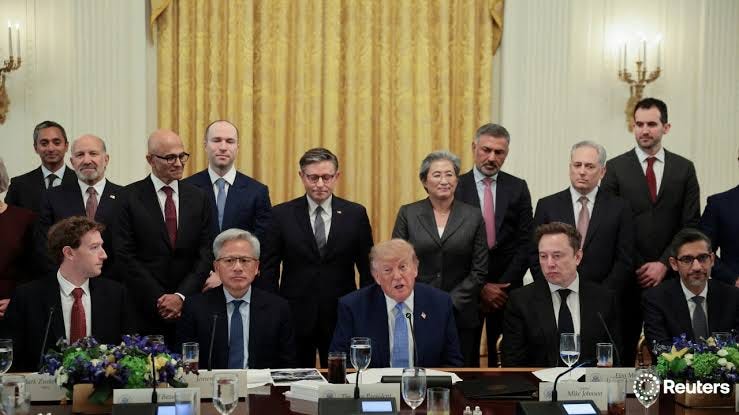
Right now there is virtually zero regulation of AI; none on the books and almost none proposed. That’s dangerous and insane. We could guide it, slow it, and demand strong regulation, but we aren’t, and that’s a choice. And here’s the simple truth about this choice: Unless we act quickly, Artificial Intelligence will force monumental changes in every aspect of our lives. And while AI may have long-term positive technological impacts, its larger, more immediate effects on us, the earth, our democracy, and the people we love will be massive and destructive to our society.
We don’t need to guess how severe these impacts might be. Tech bros like Elon Musk, the guy who thinks the Cybertruck is cool, owns an AI company, and has heavily invested in others, have been very clear about what’s coming. Musk has made repeated and well-documented promises, including that within 10 years “there will be nothing that AI cannot do better than people” and “there will be more than 1 billion humanoid robots.”
If you work, are a union member, or care about a meaningful life, maybe we should take OpenAI founder Sam Altman’s words seriously instead of supporting his data center construction. Altman, a notoriously weird but also weirdly honest man, hasn’t been shy about celebrating "the shift of leverage from labor to capital" and musing that AI will quickly make “human labor unable to outcompete raw GPU processing power.”
We’ve lived through labor-and-capital shifts before; for reference, here are some facts about what we now accept as a very disruptive societal event that impacted people with jobs in America: NAFTA’s passage in 1992 and the subsequent shift in the US job market and economy. Ask any political operative; our country and politics are still struggling to climb out of that rubble. By all accounts, NAFTA, the resulting job loss, gutted industries, and globalization reorganized our politics and eventually led to the rise of political authoritarians like Donald Trump.
We now think of this “hollowing out” of the Rust Belt as a very, very big deal. But consider that in the 5 years after NAFTA, official congressional estimates put US job losses caused by NAFTA at about 259,000, or about 19% of the U.S. workforce.
How does that compare with what AI has headed our way? We're already seeing a dramatic slowdown in hiring in many sectors, especially for new college grads. But that’s nothing compared to what’s coming. Last year, Altman, who has said 70-80% of jobs will be impacted soon, boasted that AI would quickly replace “40% of human tasks.”1 Musk has also promised that within a few years, robots will do your job, along with everyone else's. "If you want to work, it’s the same way you can go to the store and just buy some vegetables, or you can grow vegetables in your backyard. It's much harder to grow vegetables in your backyard, and some people still do it because they like growing vegetables."2
In other words, the very people making and funding AI are telling us that a huge percentage of our jobs, and of our kids, friends, and family, are likely to be replaced, and it's going to happen very quickly. And there is every reason to think that this will make the disruption of NAFTA look like child’s play. Self-driving trucks. Satellite-guided tractors. Chatbot-grade schoolteachers, accountants, lawyers, marketing professionals, songwriters, and authors- they’ll all be gone.
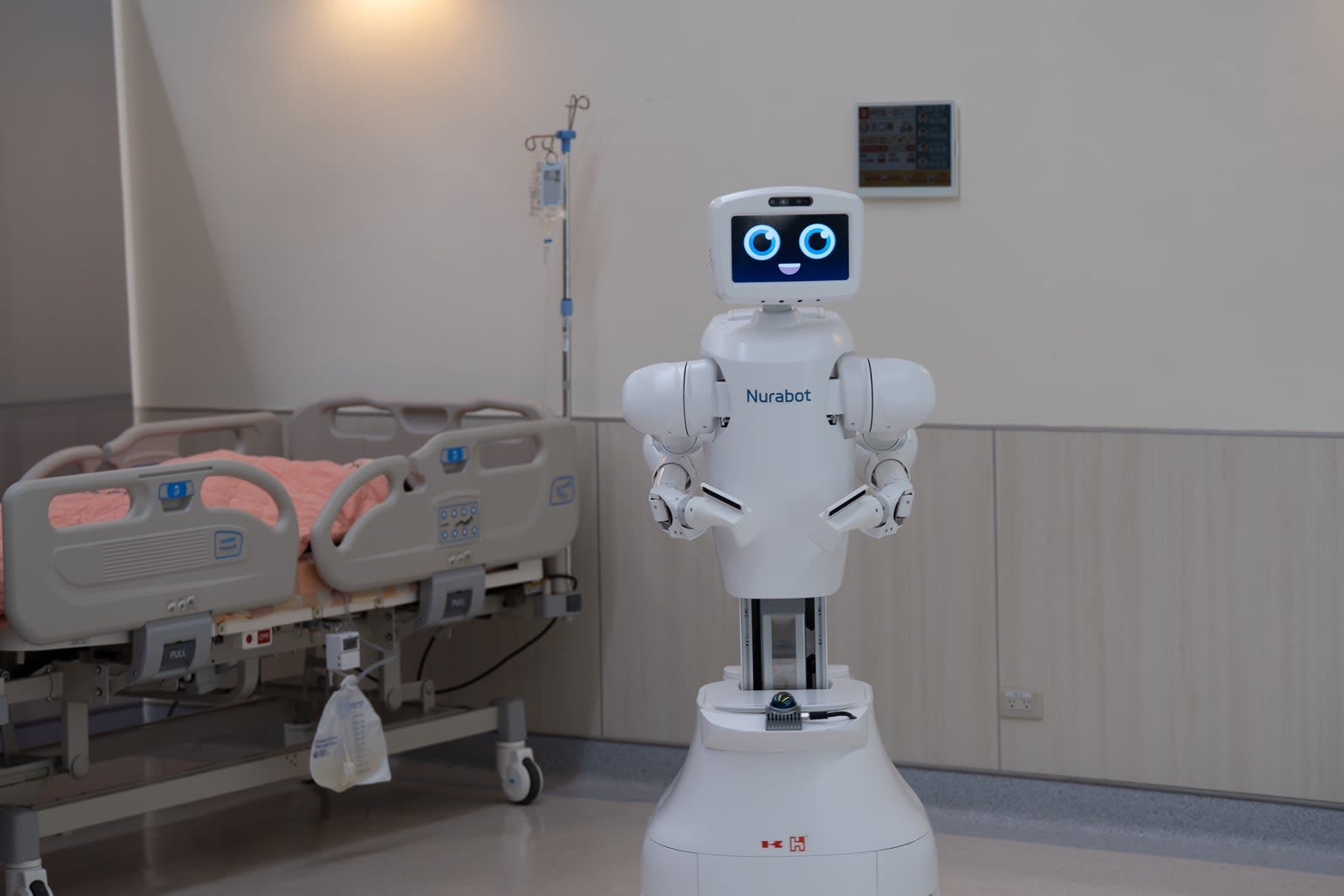
We’ll have nursing robots and restaurant wait staff that look like R2D2. Nothing will be spared; Multiple AI companies are already perfecting huge mining equipment that doesn’t require humans.3 And beyond those very real impacts on our meaningful jobs, we’ve all heard about AI-driven relationship bots that replace our significant others, so the very idea of a meaningful existence is threatened. What might happen to our families and towns, and what new political strongman might rise to exploit it all?
Can we please pause for a second here and ask a basic question? Besides these obscenely wealthy tech bros and their obscenely wealthy investors, and the obscenely wealthy titans of capital who just want to be even more obscenely wealthy by replacing people with machines, just who the fuck thinks all of this is a good idea?
There are billions of us who want nothing to do with any of this insanity, or at least want it heavily regulated to protect us. In searching for someone who has articulated this desire, a random social media comment from a user who goes by ‘BigTimi” seems to eloquently get at the issue:
“Nobody wants a city on Mars. Nobody wants AI in every app. Nobody wants data centers in space. Nobody wants robots or flying cars.
We want clean water. We want a stable climate. We want a habitable planet. We want wildlife to survive.
We want to live.”
Despite this comment's simple truth, and the frightening reality of what AI is set to do, millions of us, including most of our elected officials, are marching thoughtlessly into what even AI developers warn may be a Blade Runner-esque hellscape.
But so far, Republicans who control the House and Senate, and loyally follow Donald Trump and his sons, who are heavily invested in AI, refuse to even discuss laws that may slow or guide AI. Trump made his regulatory plans clear at the White House on Sept 14th, “The only control or ‘guardrails’ that AI needs is a STRONG AND SMART (High IQ!) PRESIDENT, and the U.S.A. has that, in spades!”4
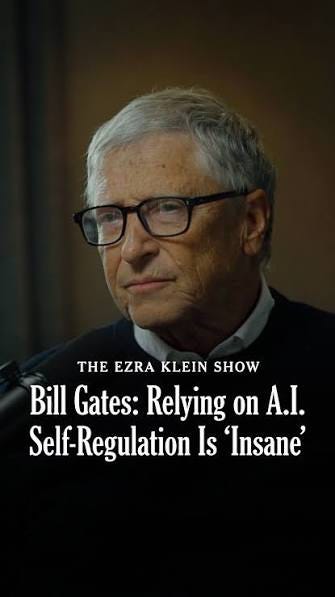
In the last few weeks, some folks have been standing up and issuing louder warnings. Bill Gates, a lifelong tech cheerleader, recently entered the fray with a NYT opinion article on the urgency of AI regulation, offering this assessment about the lack of action:
“Unfortunately, right now we are not preparing for it. I don’t see evidence that leaders, experts, and communities are confronting the challenges adequately. There is no plan to ease the entry into the AI era.” Gates went on to tell Ezra Klein that AI is “the most dangerous thing that humans have ever gone near,” including nuclear weapons.
In just the past few weeks, other AI leaders have started speaking out too, begging for regulation. These include CEOs, safety officers, and developers. Finally, people on the inside are screaming STOP!
This is all to tell you that YOU are right to demand strong regulation. Bill Gates is right; so are these other AI developers now speaking out. The truck driver who does not want to sit at home and play tiddly-winks all day while AI drives his truck is right. The teacher who believes humans should teach other humans is right. The mother who wants her son to have a real girlfriend instead of a blowup chatbot doll is right. What I am proposing here is that we wake up, wring our hands, sound alarms, and demand action.
Speak out, make a ruckus, rouse a rabble! Yes, there will be a few right-wingers who will tow the Trump line and spew idiocy like “using social media is using AI so you need it too.” But that’s a smooth-brained, laughable assertion that deliberately ignores the exponential difference between social media and a more efficient search engine versus the electricity-sucking, regenerative, self-improving AI that will replace our jobs and upend our society.
Now is the time to demand regulation, just as we would regulate any other dangerous, powerful technology. We should call elected officials and say that people and our jobs matter.
If we do not make these demands now, we must live with allowing the frightening reality described by Yuval Noah Harari, who has risen to become one of AI’s most insightful and vehement critics: “We might witness the creation of a massive new unworking class: people devoid of any economic, political or even artistic value, who contribute nothing to the prosperity, power and glory of society. This ‘useless class’ will not be merely unemployed – it will be unemployable.”5
https://finance.yahoo.com/news/openais-altman-foresees-ai-replacing-145011803.html
https://finance.yahoo.com/news/elon-musk-says-10-20-144959447.html
https://mach.io/industry/mining-autonomy/
https://www.nytimes.com/2026/09/14/us/politics/trump-ai-regulation-anthropic-dario-amodei.html
https://www.goodreads.com/quotes/9635754-consequently-despite-the-appearance-of-many-new-human-jobs-we
I am firmly opposed to AI in any form. Human civilization has existed for quite a few years just fine without it.
My biggest fear is that either a human terrorist or AI will use AI to take control of the SCADA system. SCADA is used to control a large portion of our infrastructure, including pipelines, water systems, sewer systems, etc. I became acquainted with it when I worked in the oilfield in ND. We used it to monitor tank levels. Even back in 2012 I thought about how the system could be corrupted to cause chaos. If you're not familiar with it here's a link to educate yourself.
SCADA - Wikipedia https://share.google/ZDQtvdstsKa4m1BHp
Good, albeit depressing, piece. One note, I think the jobs lost to NAFTA should say .19%, not 19% (civilian labor force was about 136,000,000 in 1997).